

Whole Body Vibration vs Traditional Exercise: What to Know

Fitness routines keep evolving, and whole body vibration has become one of the more talked-about additions to modern workout spaces. Traditional exercise includes familiar activities like strength training, cardio, flexibility work, and bodyweight movements. Whole body vibration takes a different approach: it uses a vibrating platform to send mechanical vibrations through the body while you stand, sit, or exercise on it. This article breaks down how whole body vibration works, what it may offer, and how it compares with traditional exercise so you can decide how (or whether) to use both approaches together.
What Is Whole Body Vibration?
Whole body vibration refers to a training method where a person stands, sits or performs exercises on a vibrating platform. The platform oscillates rapidly, and this movement transfers through the feet (or other contact points) into the muscles and joints.
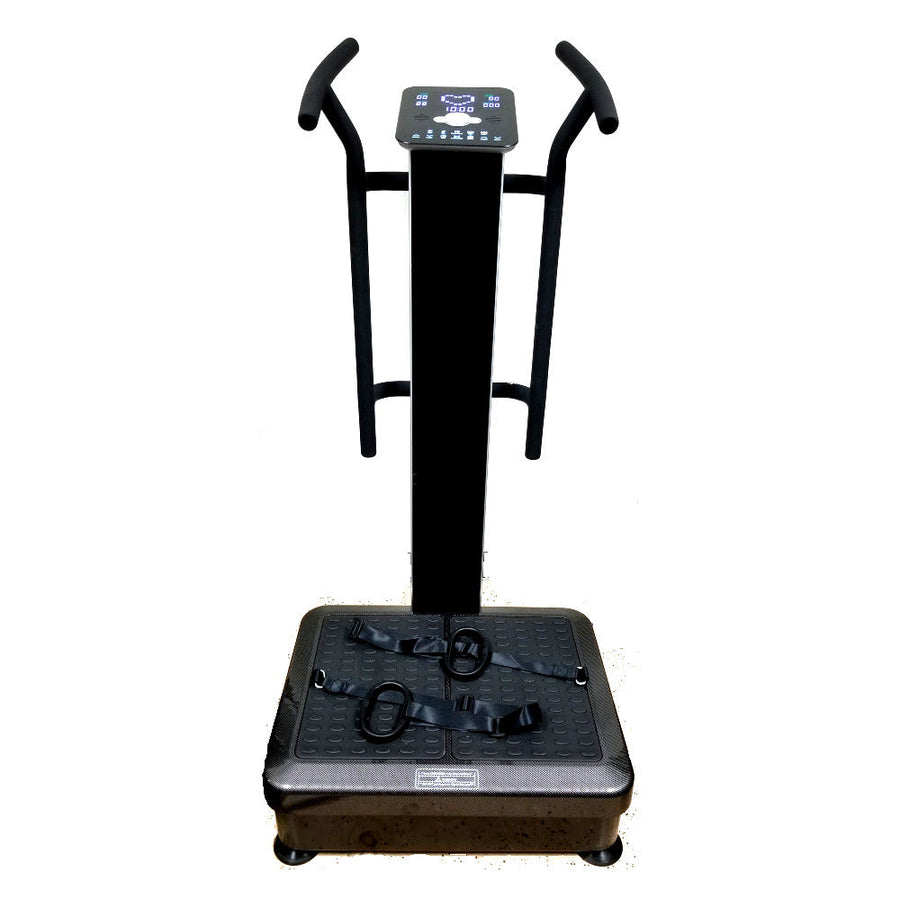
A whole body vibration machine typically consists of a vibrating base, side handles for stability, and controls to adjust speed and intensity. As the platform moves, your muscles respond by contracting and relaxing repeatedly to maintain balance and posture. People use vibration platforms because the sessions are short, require little space, and can be added to a home or studio setup without heavy equipment.
How Does Whole Body Vibration Work?
Whole body vibration works through mechanical vibrations that stimulate rapid, reflexive muscle activation. When the platform moves, your muscles fire repeatedly to stabilize your body, similar to how muscles react when you catch your balance.
Several factors shape the experience:
-
Vibration frequency - measured in Hertz, this determines how fast the platform oscillates.
-
Amplitude or intensity - the size of the platform's movement, which affects how strong the stimulus feels.
-
Vibration pattern - platforms may move vertically, or use a side-to-side "teeter-totter" motion that mimics a walking pattern.
People can stand still on the platform or perform exercises like squats, lunges or planks while it vibrates, which adds an extra challenge to standard bodyweight movements. For readers who want a deeper look at the physiology involved, this HEALTHandMED article on the science behind whole body vibration explains the research in more detail.
What Are the Potential Benefits of Whole Body Vibration?
Research on whole body vibration benefits is still developing, but several areas show promise:
-
Muscle activation - the rapid vibrations may stimulate more muscle fibers than static standing alone.
-
Strength and exercise support - vibration training can complement resistance work by adding load to familiar exercises.
-
Flexibility - some studies suggest short vibration sessions may help improve range of motion when paired with stretching.
-
Balance and coordination - the constant small adjustments required on a vibrating platform can help train stability.
-
Circulation - users often report a sense of increased blood flow during and after sessions.
-
Exercise recovery - gentle vibration is sometimes used as part of a cool-down or recovery routine.
These are potential benefits, not guarantees. Whole body vibration may help support fitness goals, but it doesn't replace a balanced approach to health, nutrition and medical care.
What Is Traditional Exercise?
Traditional exercise covers the activities most people associate with fitness: cardiovascular exercise (walking, running, cycling), resistance or strength training (weights, bands, machines), bodyweight exercises (push-ups, squats, planks), flexibility work (stretching, yoga) and functional training that mimics everyday movement patterns. Traditional exercise typically involves active, sustained movement, and it can be progressively adjusted with more weight, more reps, more distance based on a person's goals and current fitness level.
Whole Body Vibration vs Traditional Exercise
|
Factor |
Whole Body Vibration |
Traditional Exercise |
|
Muscle activation |
Triggered reflexively through vibration |
Driven by active, voluntary movement |
|
Cardiovascular training |
Limited direct cardio benefit |
Core method for building cardiovascular fitness |
|
Strength training |
Can add resistance to bodyweight moves |
Offers progressive overload with weights or bands |
|
Flexibility |
May support flexibility when combined with stretching |
Dedicated flexibility work builds range of motion directly |
|
Balance and coordination |
Naturally challenges stability |
Improved through specific balance drills |
|
Recovery |
Often used for gentle recovery sessions |
Recovery usually requires rest days or active recovery work |
|
Convenience |
Short sessions, minimal setup |
Often needs more time and varied equipment |
|
Equipment requirements |
One machine covers multiple uses |
May require weights, cardio equipment or a gym |
|
Exercise variety |
Moderate, centered around the platform |
Wide range of movement patterns and disciplines |
Neither approach is universally better. Whole body vibration offers convenience and a unique stimulus, while traditional exercise provides broader cardiovascular and strength-building benefits. The two methods often serve different purposes within the same fitness routine.
Can Whole Body Vibration Replace Traditional Exercise?
No, whole body vibration shouldn't be treated as a full replacement for traditional exercise. It works best as a complementary tool within a broader routine. Cardiovascular training builds heart and lung capacity in ways vibration platforms don't directly replicate, and resistance training builds strength through progressive load that a vibration session alone can't fully provide. Whole body vibration adds value alongside these activities, not instead of them.
Can Whole Body Vibration and Traditional Exercise Be Combined?
Yes, many people combine the two. Common approaches include:
-
Using the platform as a short warm-up before a workout to activate muscles.
-
Performing balance exercises on the platform to build stability.
-
Adding strength exercises, like squats or lunges, directly on the vibrating surface.
-
Including flexibility work, such as stretching while the platform vibrates gently.
-
Ending a session with a recovery-focused low-intensity vibration routine.
This guide on how to use a vibration machine for a beginner workout walks through a practical routine for combining the two methods.
Whole Body Vibration Exercises for Beginners
A few simple whole body vibration exercise options for beginners:
-
Squats - stand with feet shoulder-width apart and lower into a squat to engage the legs and glutes.
-
Calf raises - rise onto your toes slowly to target the lower legs.
-
Lunges - step one foot forward and lower into a lunge to work balance and leg strength together.
-
Planks - hold a plank position with hands on the platform to challenge the core.
-
Step-ups - step one foot up and down on the edge of the platform to build coordination.
Start with short holds and lower intensity settings, and increase gradually as your body adapts.
How Often Should You Use Whole Body Vibration?
There's no single fixed schedule that works for everyone. Frequency depends on your fitness level, experience with vibration training, personal goals, the machine's settings, and how vibration fits into your overall workout routine. Beginners often start with shorter, less frequent sessions and build up gradually, while more experienced users may incorporate vibration training more regularly. Adjust based on how your body responds, and avoid jumping straight into high-intensity settings.
What Should You Consider Before Using a Whole Body Vibration Machine?
Whole body vibration isn't appropriate for everyone. People with certain medical conditions, recent injuries, pregnancy, implants, or other health concerns should speak with a qualified healthcare professional before using vibration equipment. This article provides general educational information only and doesn't replace personalized medical advice.
How to Choose a Whole Body Vibration Machine
When evaluating a whole body vibration machine, consider:
-
Vibration type - vertical, oscillating (side-to-side), or a combination of both.
-
Frequency range - the span of speeds the machine offers.
-
Intensity settings - how finely you can adjust the amplitude.
-
Platform size - enough space to comfortably perform exercises.
-
Exercise options - built-in programs or app-based routines.
-
Controls and usability - how easy the machine is to adjust mid-session.
-
Intended use - general fitness, recovery, or more targeted training.
-
User comfort - handlebars, non-slip surface and stability.
-
Available features - Bluetooth speakers, display screens, or resistance bands.
If you're ready to explore options, HEALTHandMED's range of whole body vibration machines covers different frequency ranges, platform sizes and feature sets to match various fitness needs.
Conclusion
Whole body vibration and traditional exercise serve different but complementary roles. Whole body vibration offers a convenient way to activate muscles, support balance and add variety to a routine, while traditional exercise remains essential for building cardiovascular fitness, strength and flexibility over time. Used together, the two approaches can support a well-rounded fitness routine. If you're curious about adding vibration training to your workouts, explore HEALTHandMED's whole body vibration machines to find an option that fits your goals.
Frequently Asked Questions
What Is Whole Body Vibration and How Does It Work?
Whole body vibration is a training method where a vibrating platform sends mechanical vibrations through the body, prompting rapid, reflexive muscle contractions that engage muscles differently than standard exercise.
What Are the Benefits of Whole Body Vibration?
Potential benefits include muscle activation, support for strength and flexibility, improved balance and coordination, better circulation, and use as a recovery tool though results vary by individual.
Can Whole Body Vibration Replace Traditional Exercise?
No. It works best as a complementary addition to cardiovascular, strength and flexibility training rather than a full replacement.
Can You Exercise on a Whole Body Vibration Machine?
Yes. Many people perform bodyweight exercises like squats, lunges and planks directly on the platform to add an extra challenge.
How Often Should You Use Whole Body Vibration?
Frequency depends on fitness level and goals. Beginners typically start with shorter, less frequent sessions and progress gradually.
Is Whole Body Vibration Suitable for Beginners?
Yes, with lower intensity settings and shorter sessions. Anyone with health concerns should consult a healthcare professional first.
Can Whole Body Vibration and Traditional Exercise Be Combined?
Yes. It can be used as a warm-up, added to strength and balance exercises, or used for post-workout recovery.
What Exercises Can You Do on a Vibration Machine?
Common options include squats, calf raises, lunges, planks and step-ups, all performed directly on the vibrating platform.


